Quality | Reliability | info@weldalloyproducts.in | +919811259017
ALL CONSUMABLES

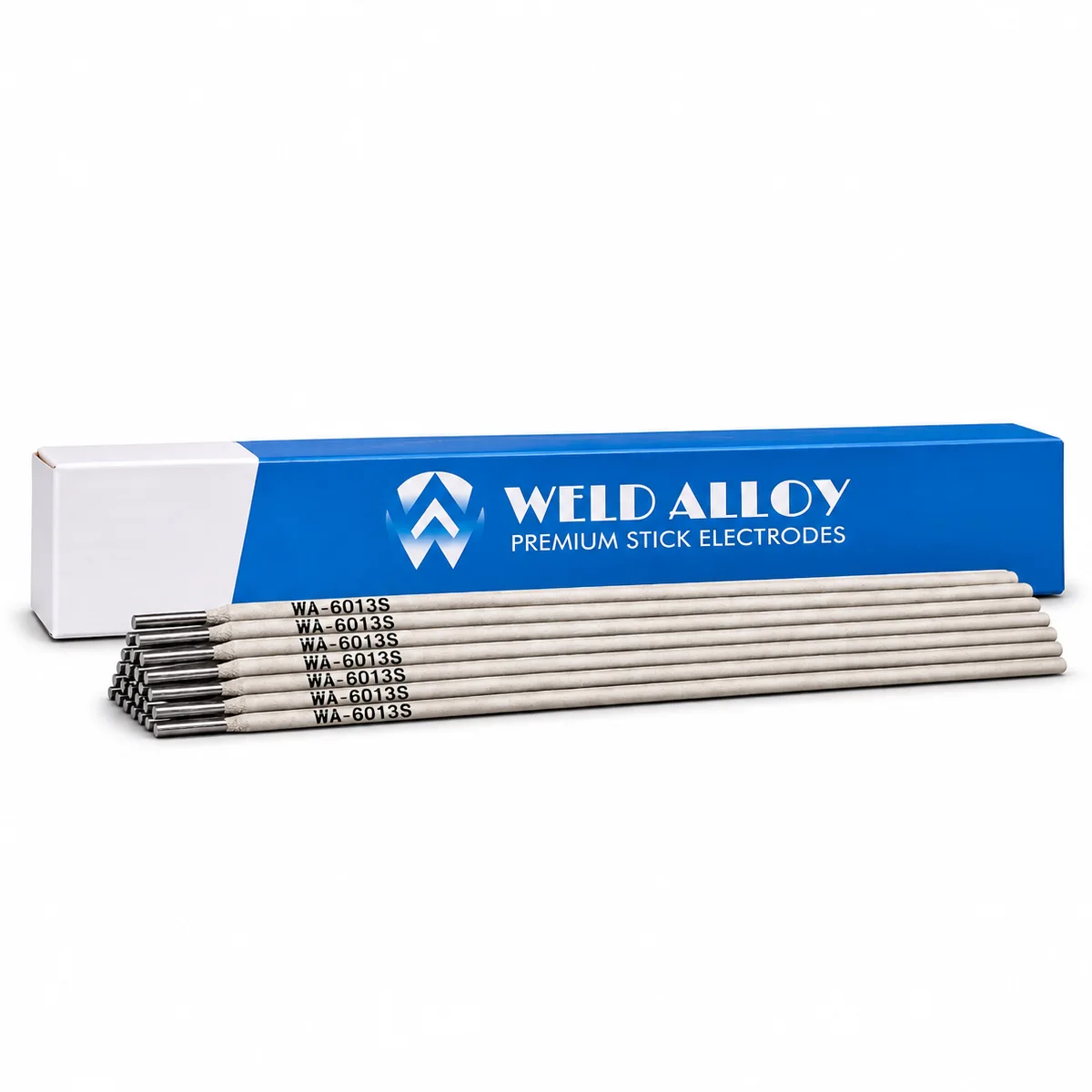
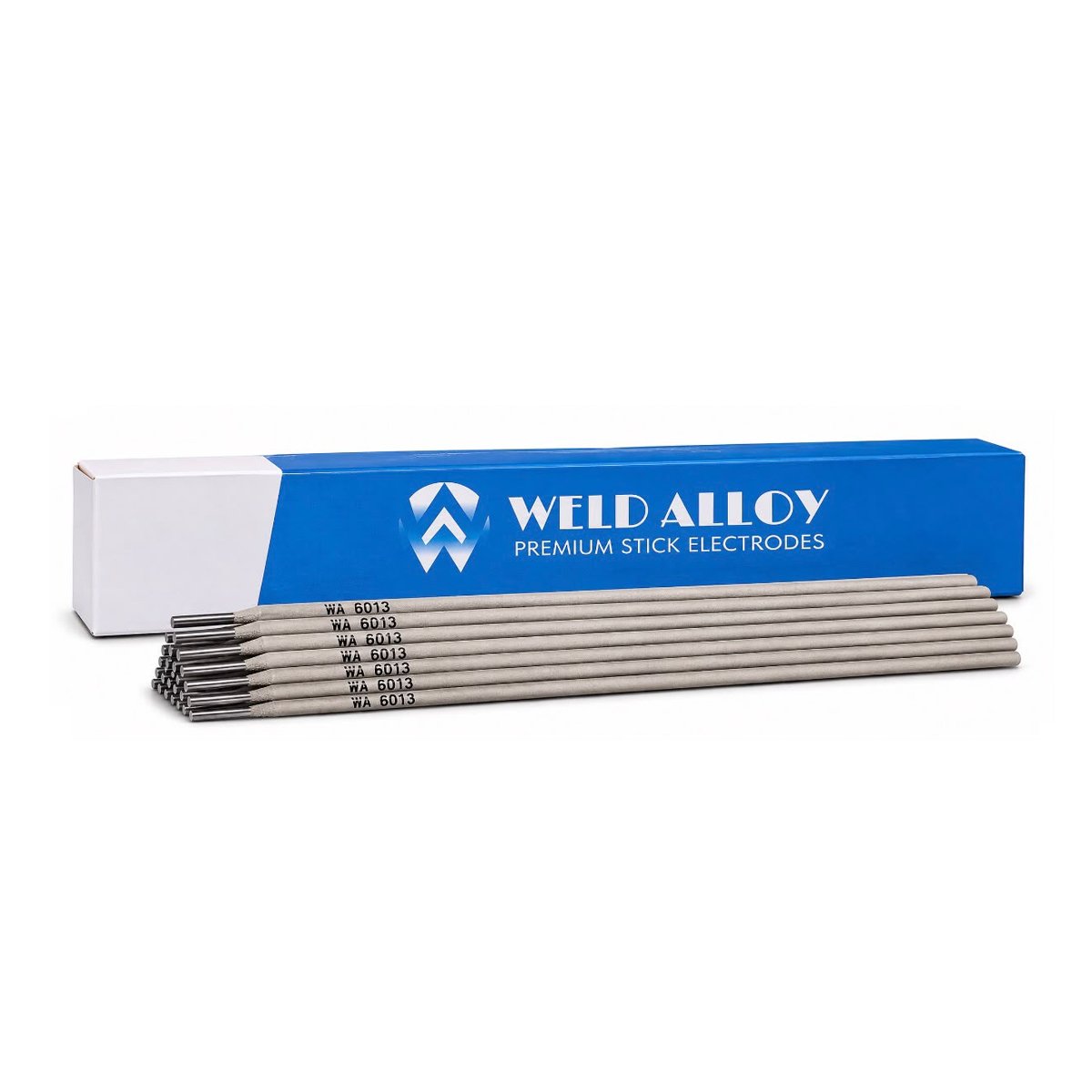
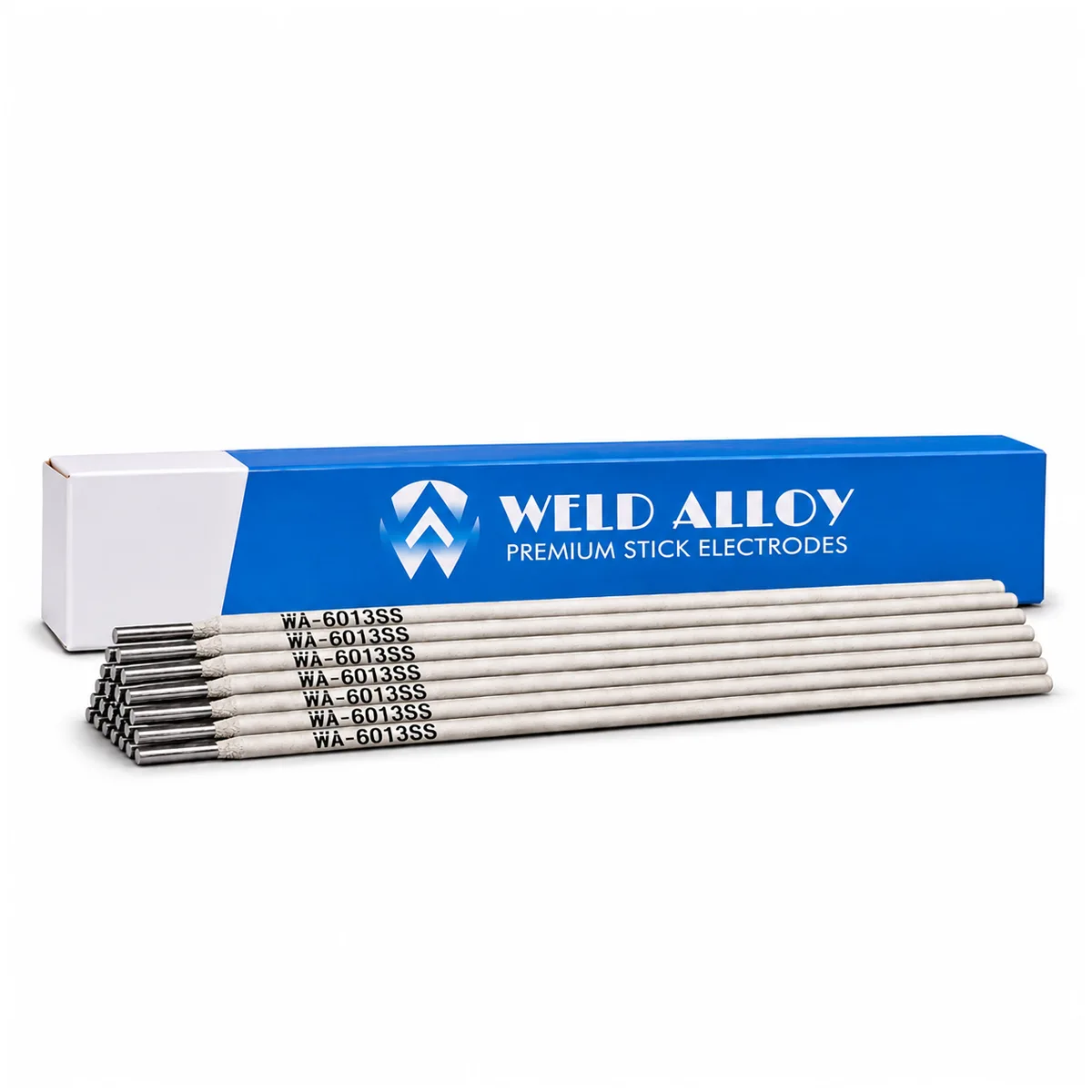
WA-6013SS

Heavy Coated Rutile Electrode for Mild Steel

WA-6013SS is a heavy-coated rutile-type welding electrode designed for mild steel, structural steel and sheet metal applications. It delivers a smooth and stable arc, low spatter, self-peeling slag and finely rippled, smooth weld beads. Suitable for all conventional welding positions, it operates on both DC and AC and can withstand higher currents for increased deposition rates.

Identification: Name Printed
Standard Classification
AWS/SFA 5.1 E6013
BS EN E42 O RR 12
Indian Standard IS 814 ERR 4221X
DIN E4322 RR(C)6
Current Type: DC (+) or AC
Welding Positions:
Flat
H-V
Horiz
Vertical Up (3G / PF) V-Up
Overhead
Heavy-Coated · Easy Arc Striking · Rutile-Type Electrode
Request a Technical Enquiry

WA-6013SS is a heavy-coated rutile electrode suitable for welding structural steels and sheet metals. Its smooth and stable arc makes striking and restriking easy. It produces minimal spatter and features self-peeling slag.

The electrode produces finely rippled, smooth, flat and shining weld beads. It operates on both DC and AC and can withstand higher currents, enabling higher deposition rates. The catalogue describes its weld deposits as radiographic quality with good mechanical properties.

Applications

The electrode is particularly suited to mild steel welding applications where weld appearance is important.

Typical applications include:

  • Steel furniture.

  • Automobile frames and bodies.

  • Rail coaches.

  • Gas cylinder bungs.

  • Storage tanks.

  • Ship hulls.

  • Boilers.

  • Pressure vessels.

  • Locomotive fireboxes.

  • Sheet metal work of all types.

Ensure that the electrodes are dry, Rebake the electrodes at 250°C - 300°C for one hour before use for best results.

(Optionally also available in vacuum - packed condition, rebaking not required in this packaging.)

  • Keep the arc length as short as possible to prevent atmospheric nitrogen and moisture pickup.
  • Operate with stringer beads or slight weave; avoid excessive weaving.
  • Ensure joint edges are free of rust, grease, oil, and moisture prior to welding.
  • Hold electrodes in portable heated quivers (100°C–120°C) during active shift dispensing.

IBR

Weld Metal Chemistry (%) (Typical)

Chemical analysis of undiluted all-weld metal deposit conforming to AWS / IS specifications.

Typical Weld Metal Analysis
Carbon (C) 0.09%
Manganese (Mn) 0.52%
Silicon (Si) 0.25%
Sulphur (S) 0.024%
Phosphorus (P) 0.022%

Weld Metal Chemistry Table

Analysis Component C Mn Si S P
Typical Analysis (%) 0.09 0.52 0.25 0.024 0.022

Controlled sulphur and phosphorus levels ensure exceptional resistance to solidification cracking and high metallurgical soundness under heavy joint restraint.
All-Weld Mechanical Properties (Typical)

Tensile strength, yield proof, ductility elongation, and sub-zero Charpy V-Notch impact toughness.

As-Welded Condition
UTS (Tensile) 490 N/mm²
YS (Yield) 410 N/mm²
Elongation (L=4d) 24%
CVN Impact @ -20°C 90 Joules
CVN Impact @ -30°C 66 Joules

Mechanical Properties Specification Table

Test Parameter UTS (Tensile) YS (Yield) Elongation (L=4d) CVN Impact @ -20°C CVN Impact @ -30°C
Typical All-Weld Values 490 N/mm² 410 N/mm² 24% 90 Joules 66 Joules

Demonstrates high Charpy V-Notch impact resistance down to -30°C, offering superior reliability in low-temperature and dynamic fatigue service conditions.

Welding Currents & Operating Parameters

Recommended amperage ranges per electrode diameter and operational current type.

Current Type: DC (+) or AC

Electrode Diameters & Current Ranges

Size (mm) Current (Amps) Current Type Recommended Applications
2.00 × 300 mm 50 –70 A DC (+) or AC Root pass welding, thin sections, all positions
2.50 × 350 mm 80 – 100 A DC (+) or AC Root pass welding, thin sections, all positions
4.00 × 450 mm 100 – 140 A DC (+) or AC Heavy fill passes, pressure parts, high deposition rate
5.00 × 450 mm 200 – 250 A DC (+) or AC Flat and horizontal fillet joints on thick steel plates
6.30 × 450 mm 260 – 340 A DC (+) or AC High-productivity downhand welding on heavy casting and heavy sections

Welding Instructions & Conditioning Protocols

Follow standard metallurgical procedures for optimum deposit quality and crack prevention.

PDF Datasheet Re-Bake: 250°C – 300°C for 1 Hour
Welding & Conditioning Instructions

Ensure that the electrodes are dry, Rebake the electrodes at 250°C - 300°C for one hour before use for best results.

(Optionally also available in vacuum - packed condition, rebaking not required in this packaging.)

  • Keep the arc length as short as possible to prevent atmospheric nitrogen and moisture pickup.
  • Operate with stringer beads or slight weave; avoid excessive weaving.
  • Ensure joint edges are free of rust, grease, oil, and moisture prior to welding.
  • Hold electrodes in portable heated quivers (100°C–120°C) during active shift dispensing.

Product Details & Technical Description

Comprehensive technical overview, metallurgical scope, and performance characteristics.

Product Description

WA-6013SS – Heavy Coated Rutile Type Electrode for Mild Steel

WA-6013SS is a heavy-coated rutile-type electrode developed for mild steel welding applications. It is suitable for structural steel fabrication and sheet metal work where weld appearance, arc stability and deposition performance are important.

The electrode offers a smooth and stable arc with easy striking and restriking characteristics. Its low-spatter performance and self-peeling slag help simplify post-weld cleaning, while the finely rippled, smooth, flat and shining weld beads provide an excellent weld finish.

Designed to operate with equal ease on both DC and AC, WA-6013SS can withstand higher welding currents, enabling higher deposition rates. It operates in all conventional welding positions and produces weld metal described in the catalogue as radiographic quality with good mechanical properties.

Typical applications include steel furniture, automobile frames and bodies, rail coaches, gas cylinder bungs, storage tanks, ship hulls, boilers, pressure vessels, locomotive fireboxes and sheet metal fabrication.

RELATED MILD STEEL ELECTRODES

Related Mild Steel Electrodes

View All Mild Steel Electrodes

Ready to Strengthen Your Next Engineering Project?
Partner with WAPL for Proven Welding Reliability.

Chat with us